September 26, 2026 · 8 min
Shielding Your Haven: How to Protect Your Home from Fresno’s Sun with the Right Exterior Paint
If you live in Fresno, Clovis, or anywhere else in the Valley, you already know the sun is not a background detail. It is the main weather. Summer walls get hot enough to hurt your hand. South and west elevations fade first. Dust from the fields settles into every texture. A paint job that would last a decade on the coast can look tired here in four or five years if the product and the prep were wrong.
This is a practical guide to what actually holds up, written from the way we paint houses in this climate at Liberty Painting & Decorating Inc.
What the Fresno sun does to a house
Two things wear paint out here, and they work together.
UV. Midsummer UV in Fresno regularly sits in the 10–11 range. That radiation breaks down the binder that holds pigment in place. The first signs are chalking (a dusty film on your palm when you rub the wall) and color that looks washed out, especially on the afternoon side of the house.
Heat cycling. Triple-digit days and cooler nights make siding, stucco, and trim expand and shrink. A brittle film cracks. Once cracks open, dust and moisture get under the coating and peeling follows.
Valley dust makes it worse. Fine agricultural grit sits on the surface, holds heat, and acts like sandpaper in the wind. If you paint over that film instead of washing it off, the new coat is already sitting on a weak layer.
That is why two houses painted the same color in the same year can look completely different by year three. One got washed, repaired, primed where it needed it, and coated with a flexible acrylic. The other got a cheap coat rolled over chalk.
What to look for in exterior paint
Skip the “contractor grade” gallon that looks like a deal. In this climate you want a 100% acrylic exterior with UV-stable pigments and enough flexibility to move with the wall.
The lines we actually put on Fresno County houses:
- Sherwin-Williams Duration. Thicker film (PermaLast), stays flexible through heat swings, strong choice for siding, trim, and a lot of stucco that is in decent shape.
- Sherwin-Williams Emerald Rain Refresh. Premium color hold and a film that sheds dirt when it rains — useful on light stucco that otherwise looks dingy between washings.
- Sherwin-Williams SuperPaint Exterior. Solid mid-tier when the surface is sound and the color is not a deep, fade-prone shade.
- Benjamin Moore Aura Exterior. Excellent color lock if you want a saturated body color that still looks like itself in five years.
On cracked or tired stucco, a true elastomeric coating can make sense. It bridges hairline cracks and flexes. It is not automatic on every stucco house. Elastomerics are thicker, can change the look of the texture, and they have to go on a clean, sound wall or they just hide problems for a season. We specify them when the substrate calls for them, not because they sound impressive.
What does not belong on a Valley exterior: cheap vinyl-acrylic blends, leftover interior paint, and anything that skins over in ten minutes on a 105° wall. Fast skinning is how you get lap marks and a coat that never really bonded.
Color and sheen are part of the protection
Dark navy and charcoal look sharp on a mood board. On a west wall in July they also absorb a lot of heat, which cooks the film and fades the pigment faster. If you want a deep color, spend the money on a premium line with real color-retention chemistry, and accept that the sun side will still age quicker than the north side.
Lighter body colors — warm whites, sand, pale taupe, soft gray — reflect more solar heat. That is not just an energy talking point. Cooler walls put less stress on the coating.
Sheen matters too. Flat hides texture flaws but holds dirt and chalks sooner in full sun. Satin or low-luster is usually the better everyday choice here: enough sheen to shed dust, not so much that every stucco ripple shines. Trim can go a step glossier so it cleans and lasts.
Prep is most of the job
Paint is the last 20%. If you remember one thing from this page, make it that.
A Fresno exterior that is going to last gets treated in this order:
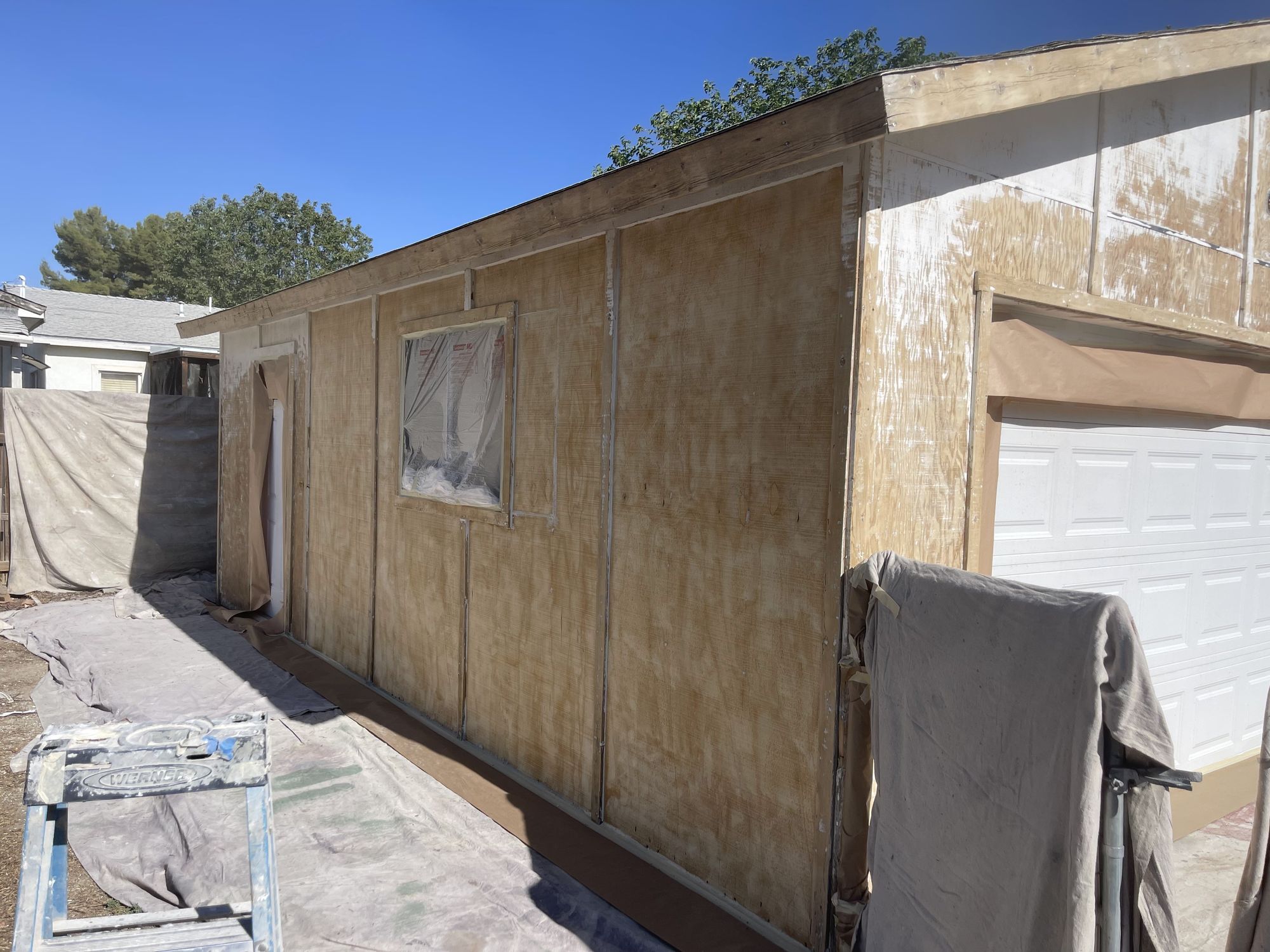
- Wash. Power wash at a controlled pressure — enough to lift chalk, pollen, and valley dust, not enough to etch stucco or drive water behind siding. Let the wall dry. In this climate that is often 24–48 hours, longer on shaded or north walls.
- Scrape and sand. Every loose flake comes off. Feather the edges so you do not see a ridge under the new coat.
- Repair. Soft wood, open joints, hairline stucco cracks, failed caulk around windows. Paint will not fix rot.
- Caulk. Exterior-grade, paintable. Gaps at trim and penetrations are how water gets behind a new film.
- Prime where it is needed. Bare wood, patched stucco, chalky masonry, stain bleed, rust. Spot prime is fine when the existing film is sound. Full prime when the house is chalked, porous, or changing color dramatically.
- Two finish coats. Thin and even. One heavy coat in this heat skins on the surface and stays soft underneath.
Skip the wash and you are painting dust. Skip the primer on chalk and you are painting a powder that will let go.
When to paint — and when to wait
The can says 50°F to 90°F. The wall does not care about the air temperature on your phone. Stucco and dark siding in August can be well over 120°F in the afternoon even when the air is “only” 98.
We schedule around that:
- Spring and fall are the easiest windows.
- Summer is doable if the crew starts at first light, works the shade around the house, and stops when the surface is too hot to take paint.
- Winter works on the warmer days, as long as the wall stays above spec overnight so the film can cure. We will turn a day down if it will not.
Never paint a wall that is in hard midday sun. The coat flashes, you lose the wet edge, and adhesion suffers. Follow the shade. It is slower. It also lasts.
Stucco, wood, fiber cement — they are not the same job
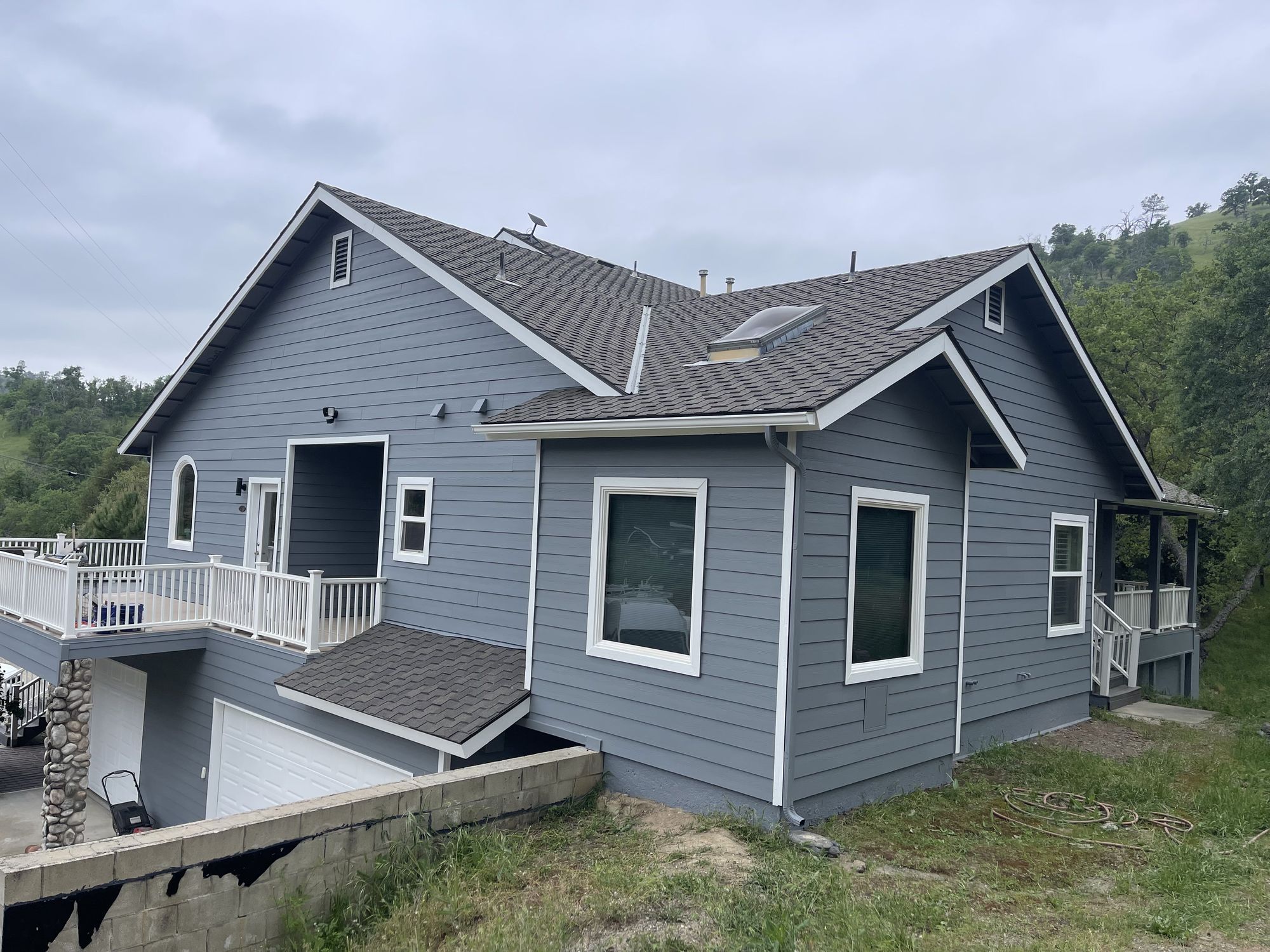
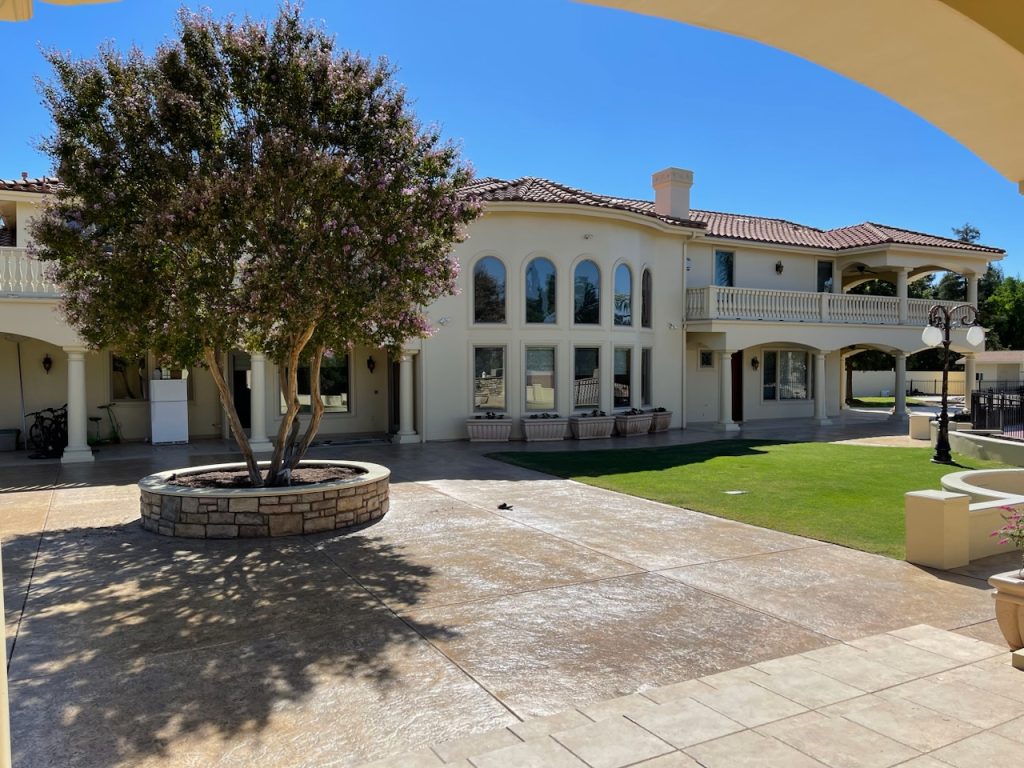
Most of the Valley housing stock is stucco. It chalks, it cracks at stress points, and it can show efflorescence after a wet winter. Wash, treat salts if they are present, patch, prime the patches, then coat. Do not blast it with a 3000 PSI tip and call it prep.
Wood siding and trim move more. They need a flexible acrylic, stain-blocking primer on bare or tannin-heavy species, and honest repair of anything soft. Painting over rot is a short-term costume.
Fiber cement is more stable, but it still needs a clean surface and the right primer at cut edges and fasteners. Factory finish is not forever in this UV.
After the painters leave
Walk the house once a year. South and west first. Look for chalk on your hand, open caulk lines, peeling at window stools, and fading that is more than a little dull.
A rinse with a garden hose or a gentle wash every year or two pulls dust off before it cooks into the film. Fix a failed bead of caulk when you see it. Waiting until a whole elevation is peeling is how a maintenance coat turns into a full scrape.
Most well-prepped premium jobs in Fresno County are on an 8–12 year conversation, sometimes longer on protected elevations, shorter on a dark west wall with no overhang. That range assumes the prep was real.
If you want it done once
Liberty Painting & Decorating Inc is based in Clovis and has been painting Fresno County houses for years — Fig Garden, Tower District, Woodward Park, Sanger, Madera, Reedley, Selma, the foothills. We are licensed (CSLB #1036625), insured, and Google Guaranteed. The paints above are what we spec because they survive this sun, not because they were on sale.
If your exterior is chalking, peeling on the afternoon side, or just tired, we will walk the house with you, tell you what the substrate actually needs, and give you a straight estimate.
Call (559) 573-0110 or email Jorge@LPaintingInc.com.
Liberty Painting & Decorating Inc · Clovis, CA · CSLB 1036625